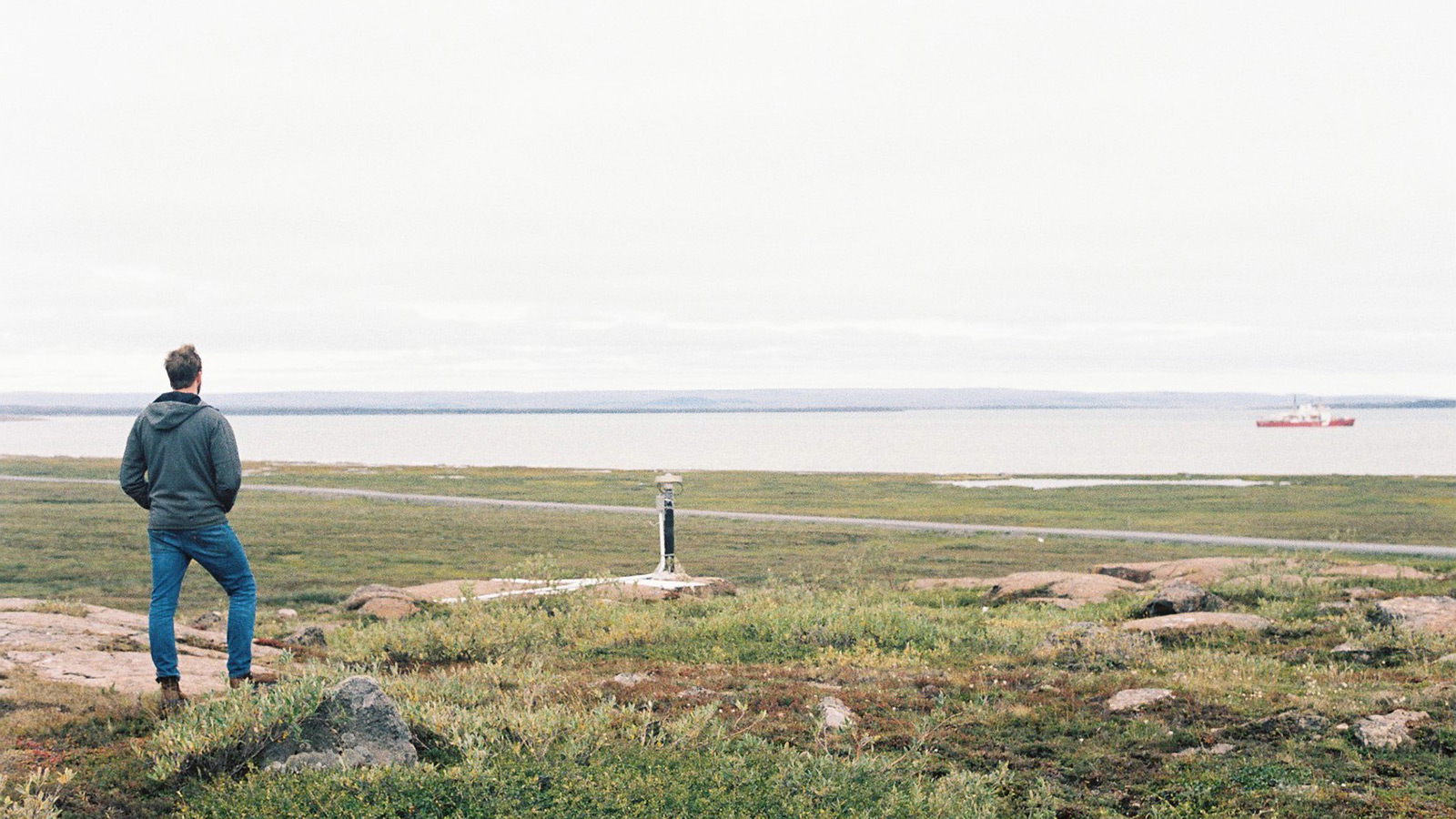
- Oceanographer researcher, RBR Ltd.
- Ecological monitoring technical, Parks Canada
- PhD candidate in fishery ecology, UBC Institute for Oceans and Fisheries
- Research marine biologist and biological consultant, Fisheries and Oceans Canada
- Species-at-risk biologist, Bedford Institute of Oceanography
- Research associate, University of Washington School of Aquatic and Fishery Sciences
Get a post-graduate work permit for up to three years if you are a full-time UBC international student graduating from a bachelor’s degree program and meet all eligibility criteria.
Want to learn more?
Visit the Faculty of Science website to learn more about Oceanography.
View full program detailsProgram information
Oceanography is the study of our oceans, including their circulation, physical and chemical properties, and life. Physical, biological, and chemical oceanographers often work together in this richly interdisciplinary science to better understand how the ocean works, affects global climate, and impacts communities. You could tackle challenges of safe shipping, sustainable food supply, sanitary sewage disposal, and healthy recreation.
Program overview
- Campus
- Vancouver
- Program length
- 4 years
- Honours This option has additional requirements compared to those required in a Major specialization. Students must maintain high academic standing and may have to write a graduating thesis.
- Yes
- Co-op Co-op is an optional program where students alternate between academic terms and paid work terms. It’s an opportunity to gain relevant job experience while completing your degree.
- Yes
- Faculty
- Faculty of Science
- Degree
- Bachelor of Science
What you'll learn
Oceanographers study the physical and chemical properties of ocean water, the life within it, the sea floor, and the ocean’s connection to the rest of the planet. Oceanography draws from biology, physics, chemistry, and geology, making it a truly multidisciplinary science. Oceanographers work in diverse areas, including biological oceanography; the physics of waves, tides, and currents; the creation, evolution, and structure of sea floors; and chemical oceanography. They work to understand how the ocean works and tackle challenges related to global climate change and its impacts on ocean communities, safe shipping, and sustainable food supplies.
Oceanography is offered at the undergraduate level through the Honours in Fisheries Oceanography program, which is intended for students wishing to pursue graduate studies in the field or work as consultants in fisheries/environmental management. Oceanography can also be paired with another science subject as a Combined Major or Combined Honours degree, including Biology, Chemistry, Geology, Geophysics, Microbiology and Immunology, or Physics. The Combined Honours programs are generally geared towards students intending to pursue graduate work in oceanography and involve an upper-level field course in which students develop and carry out their own research program.
Campus features
UBC is home to the Institute for the Oceans and Fisheries, as well as the Marine Mammal Research Unit (MMRU), Project Seahorse, and the Pacific Centre for Isotopic and Geochemical Research (PCIGR). There is also the Ocean Dynamics Laboratory which conducts oceanographic research. Its current topics include the nearby ocean, arctic hydrography, and lakes of British Columbia.
Courses
There are hundreds of courses you can take within Oceanography. Here are a few you might like.
Introduction to processes in ocean and atmosphere. Heat, current, winds, clouds, marine life, resources. Effects of coupling, climate change, pollution.
Mathematical computer-based problem solving in the physical, chemical, and biological sciences. Problems drawn from studies of the earth, the oceans and the atmosphere.
Physical, chemical, and biological processes in the ocean and their interaction with climate and marine food-webs.
An introduction to the ecology and management of freshwater and marine fisheries. Topics include: population dynamics, species interactions, communities, environmental influences, stock assessment, economics and sociology of fisheries. Laboratories will consist of numerical analyses and simulations.
Outcomes
A BSc in Oceanography will equip you with laboratory experience, computer skills, and an in-depth knowledge of the oceanic environment. Graduates are qualified for work in a wide range of jobs in environmental organizations affecting policy, commerce, and education.
The Honours in Fisheries Oceanography and Combined Honours prepare you for additional graduate studies in a wide range of oceanography subfields.
Program graduates
Take action & plan
Program requirements
Choose application type:
English-language requirements
English is the language of instruction at UBC. All prospective students must demonstrate English-language competency prior to admission. There are numerous ways to meet the English Language Admission Standard.
General admission requirements
IB Diploma Programme
- Completed IB Diploma, including at least three Higher Level courses.
IB Certificate Courses
- IB Certificate courses (Standard and Higher Level) may be used in an admissions average if you are graduating from a recognized high school curriculum that can be used as your basis of admission.
- IB Math Applications and Interpretations SL, or IB Math Studies, do not satisfy the math requirement for admission to UBC’s science-based programs, the Faculty of Management, the UBC Sauder School of Business, or the Vancouver School of Economics.
Degree-specific requirements: Science
- IB Math Analysis and Approaches SL or HL, or IB Math Applications and Interpretations HL (IB Math Applications and Interpretations SL, or IB Math Studies, are not acceptable)
- One of IB Biology, IB Chemistry, or IB Physics
- Grade 11 or equivalent Chemistry, and
- Grade 11 or equivalent Physics (may be waived with grades of 5 in IB Chemistry and in your IB Mathematics course)
Note: Grade 11 Chemistry and Physics requirements listed are only relevant to students who are not completing the equivalent IB Diploma Chemistry and/or Physics courses.
For students studying outside of Canada, some examples of courses that may be accepted as Grade 11 equivalents are junior-level courses for American students, and IGCSE and O Level for those following British-patterned curricula.
Related courses
The following subject categories are particularly relevant for this degree. Consider taking courses in these areas in your junior year and senior year.
- Language Arts
- Mathematics and Computation
- Sciences
Want to get a feel for campus?
If you’re unable to visit UBC in person, or you just want to get a sneak peek at your new home campus before you arrive, take one of our virtual tours. Current UBC students walk you through UBC’s residences, study spots, recreational facilities, lecture halls, academic buildings, and more.
Related programs
Want to learn more?
Visit the Faculty of Science website to learn more about Oceanography.
View full program detailsGet a post-graduate work permit for up to three years if you are a full-time UBC international student graduating from a bachelor’s degree program and meet all eligibility criteria.
Want to learn more?
Visit the Faculty of Science website to learn more about Oceanography.
View full program details