- Regional Hydrogeologist, Ministry of Forests, Lands, Natural Resource Operations and Rural Development
- Environmental Consultant, Indigenous and Northern Affairs Canada
- Senior Aquatic Ecologist, Ministry of Forests, Lands, Natural Resource Operations and Rural Development
- Water Stewardship Director, Okanagan Basin Water Board
Get a post-graduate work permit for up to three years if you are a full-time UBC international student graduating from a bachelor’s degree program and meet all eligibility criteria.
Want to learn more?
Visit the Irving K. Barber Faculty of Science website to learn more about Freshwater Science.
View full program detailsProgram information
Prepare yourself for a career in inland aquatic ecosystems. As a Freshwater Science student, you’ll study water quality, hydrology, water resources, aquatic organisms, and the health of aquatic ecosystems.
Program overview
- Campus
- Okanagan
- Program length
- 4 years
- Honours This option has additional requirements compared to those required in a Major specialization. Students must maintain high academic standing and may have to write a graduating thesis.
- Yes
- Co-op Co-op is an optional program where students alternate between academic terms and paid work terms. It’s an opportunity to gain relevant job experience while completing your degree.
- Yes
- Faculty
- Irving K. Barber Faculty of Science
- Degree
- Bachelor of Science
What you'll learn
Freshwater Science integrates aspects of biology, chemistry, geography, and earth and environmental sciences to understand inland aquatic systems. Designed to give you a broad perspective on inland waters, this program takes a highly interdisciplinary approach to explore the science behind emerging environmental issues facing our society. Key issues include land use and water interactions, toxicants in the aquatic environment, and the potential effects of global climate change on aquatic environments and water resources.
As a Bachelor of Science student on UBC’s Okanagan campus, you can choose a major or honours in Freshwater Science.
Experiential learning and research
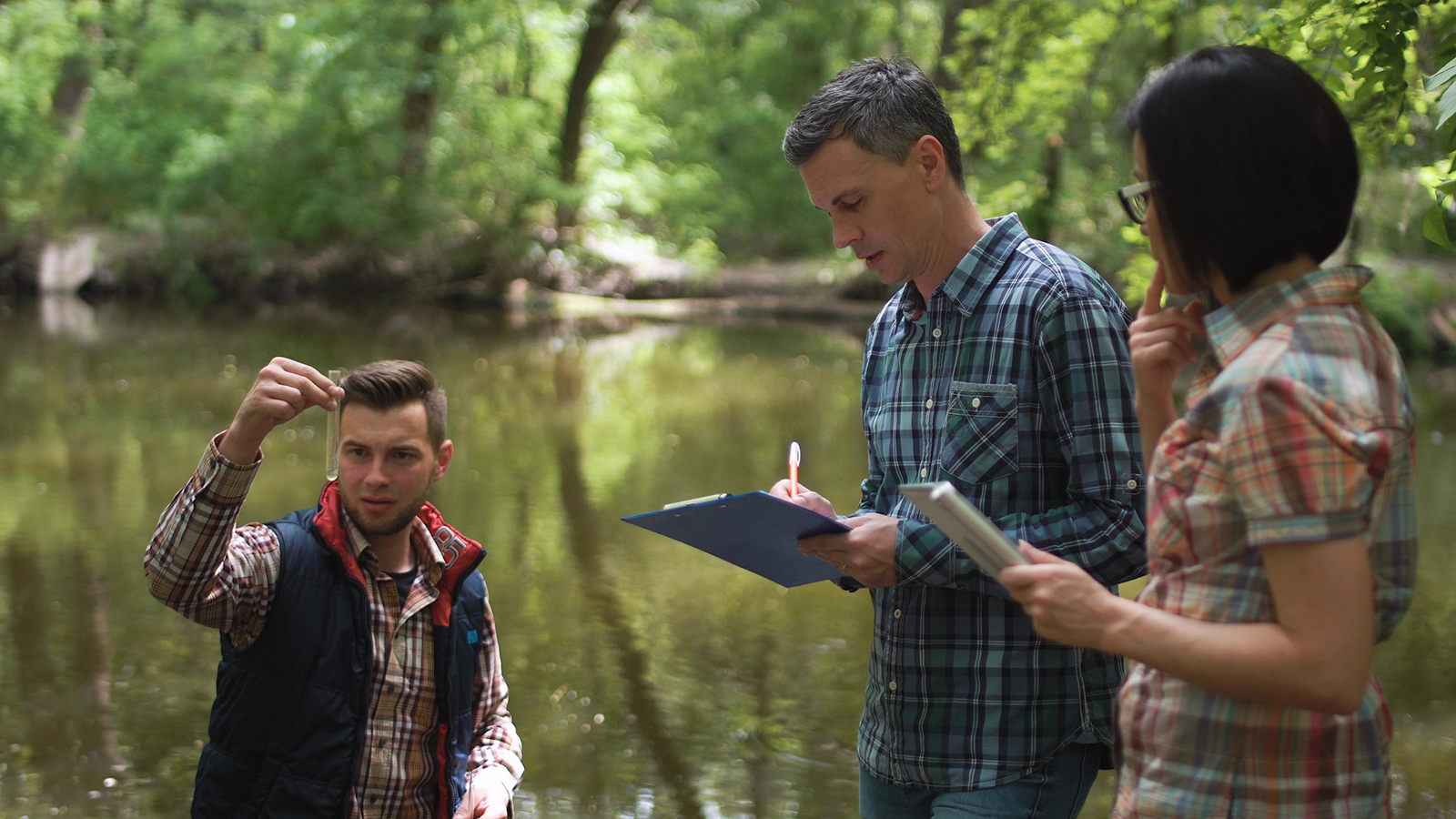
Your coursework will be enhanced with field trips and opportunities to get out into the Okanagan’s great outdoors. In your third or fourth year of study, you’ll have the option of completing directed studies and conducting independent readings and research.
If you choose the honours option, you’ll undertake an independent research project under the supervision of a faculty member. The Irving K. Barber Faculty of Science holds an annual undergraduate research conference on UBC’s Okanagan campus to showcase student research projects.
Campus features
The Department of Earth, Environmental and Geographic Sciences is home to a wide range of research facilities:
- Fipke Laboratory for Trace Element Research (FiLTER), a multi-million dollar, state-of-the-art facility with equipment for major and trace element analysis and electron microbeam imaging
- Okanagan Institute for Biodiversity, Resilience, and Ecosystem Services (BRAES), a collaborative research institute working in ecology, biodiversity and conservation, water conservation and quality, and environmental sustainability
In addition, individual faculty members have active research programs backed by modern laboratory facilities, including the Complex Environmental Systems Lab, the GIS Lab for Spatial Data Analysis, and the PALEO Lab.
Courses
There are hundreds of courses you can take within Freshwater Science. Here are a few you might like.
A quantitative and scientific approach to the understanding of global energy, water and nutrient cycling; growth of human populations and their effects on the environment and ecosystem function. Functional understanding of modern environmental issues, and the requirements of, and opportunities for, sustainability.
Physical principles underlying weather and climates. Thermal, moisture, and wind climates at scales from valleys to the globe. Daily weather, air pollution, global change.
Integrated approaches to freshwater science and its place in environmental science. Ecosystem ecology of inland waters relating to aquatic organisms with their physical and chemical environment.
Integrated approach to freshwater resources and their place in environmental science. Topical issues with emphasis on management options and consequences.
Outcomes
You’ll graduate with the skills and knowledge necessary to deal with future national and international freshwater environmental problems concerning water quality and quantity. As a Freshwater Science graduate, you could work as a water quality specialist, a hydrologist, a water stewardship officer, or an aquatic ecologist.
Program graduates
Take action & plan
Program requirements
Choose application type:
English-language requirements
English is the language of instruction at UBC. All prospective students must demonstrate English-language competency prior to admission. There are numerous ways to meet the English Language Admission Standard.
General admission requirements
IB Diploma Programme
- Completed IB Diploma, including at least three Higher Level courses.
IB Certificate Courses
- IB Certificate courses (Standard and Higher Level) may be used in an admissions average if you are graduating from a recognized high school curriculum that can be used as your basis of admission.
- IB Math Applications and Interpretations SL, or IB Math Studies, do not satisfy the math requirement for admission to UBC’s science-based programs, the Faculty of Management, the UBC Sauder School of Business, or the Vancouver School of Economics.
Degree-specific requirements: Science
- IB Math Analysis and Approaches SL or HL, or IB Math Applications and Interpretations HL (IB Math Applications and Interpretations SL, or IB Math Studies, are not acceptable)
- One of IB Biology, IB Chemistry, or IB Physics
- Grade 11 or equivalent Chemistry
- Grade 11 or equivalent Physics is strongly recommended
Note: Grade 11 Chemistry and Physics requirements listed are only relevant to students who are not completing the equivalent IB Diploma Chemistry and/or Physics courses.
For students studying outside of Canada, some examples of courses that may be accepted as Grade 11 equivalents are junior-level courses for American students, and IGCSE and O Level for those following British-patterned curricula.
Related courses
The following subject categories are particularly relevant for this degree. Consider taking courses in these areas in your junior year and senior year.
- Language Arts
- Mathematics and Computation
- Sciences
Want to get a feel for campus?
If you’re unable to visit UBC in person, or you just want to get a sneak peek at your new home campus before you arrive, take one of our virtual tours. Current UBC students walk you through UBC’s residences, study spots, recreational facilities, lecture halls, academic buildings, and more.
Related programs
Want to learn more?
Visit the Irving K. Barber Faculty of Science website to learn more about Freshwater Science.
View full program detailsGet a post-graduate work permit for up to three years if you are a full-time UBC international student graduating from a bachelor’s degree program and meet all eligibility criteria.
Want to learn more?
Visit the Irving K. Barber Faculty of Science website to learn more about Freshwater Science.
View full program details