- Environmental hydrogeologist, Hemmera
- Geologist, Alamos Gold Inc.
- PhD student in Mining Engineering, University of Quebec
- Research assistant, Mineral Deposit Research Unit
- Mining and metals professional, Golden Predator Corp.
Get a post-graduate work permit for up to three years if you are a full-time UBC international student graduating from a bachelor’s degree program and meet all eligibility criteria.
Want to learn more?
Visit the Faculty of Science website to learn more about Earth and Ocean Sciences.
View full program detailsProgram information
Learn more about how the earth works, from the core to the atmosphere, and from the distant genesis of our planet to current and future trends in environmental and global issues. Earth and Ocean Sciences spans virtually all aspects of understanding the history and dynamics of our planet, as well as how to best manage its resources and the environment we live in.
Program overview
- Campus
- Vancouver
- Program length
- 4 years
- Honours This option has additional requirements compared to those required in a Major specialization. Students must maintain high academic standing and may have to write a graduating thesis.
- Yes
- Co-op Co-op is an optional program where students alternate between academic terms and paid work terms. It’s an opportunity to gain relevant job experience while completing your degree.
- Yes
- Faculty
- Faculty of Science
- Degree
- Bachelor of Science
What you'll learn
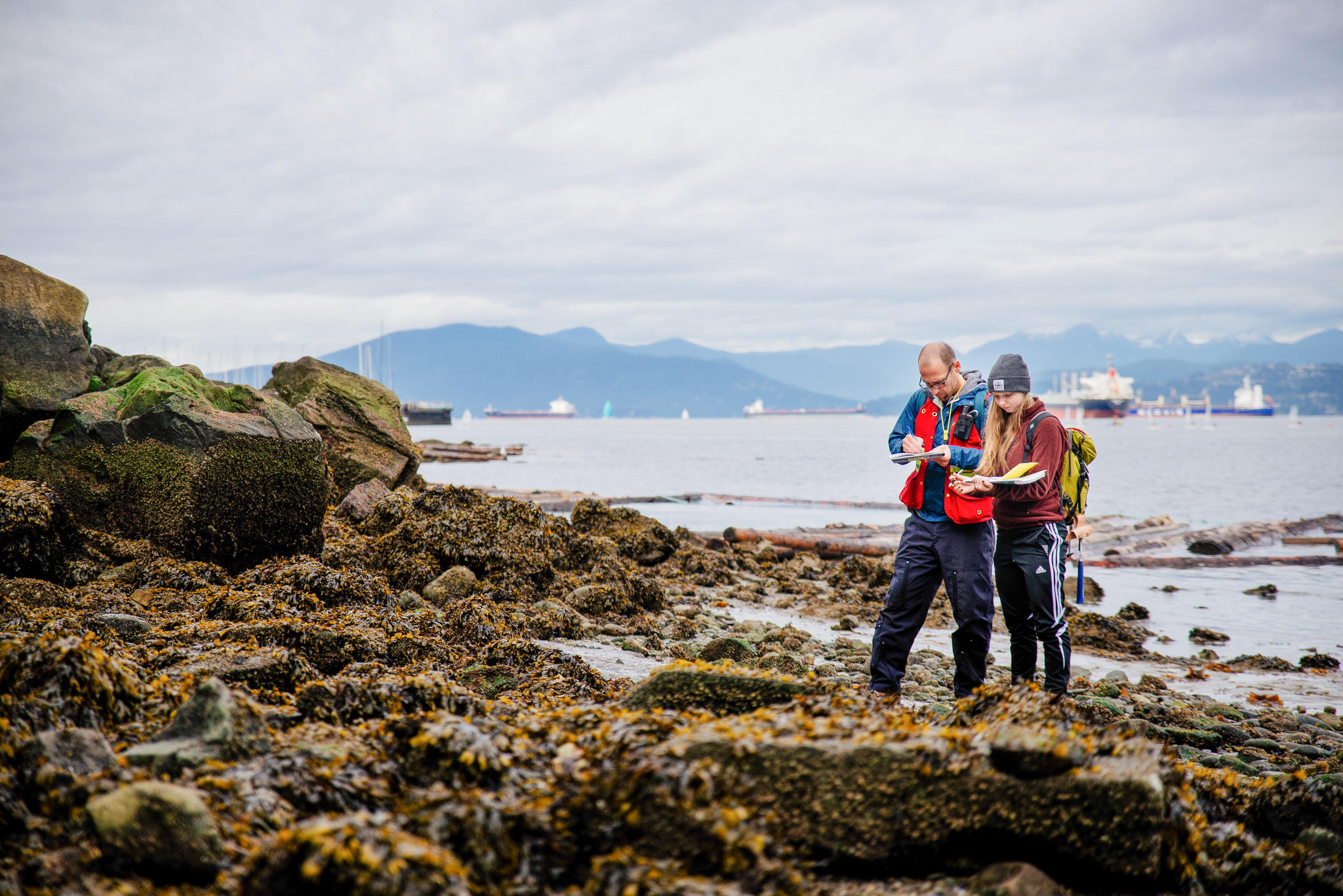
Earth and Ocean Sciences offers you the opportunity to combine your interests in physics, mathematics, chemistry, biology, computer applications, and the environment. You will study the atmosphere and the solid and liquid earth, using knowledge of the past and present to predict the future of our global system.
Specific areas of focus include: Mineral and Fuel Deposits, Crustal and Mantle Processes, Sedimentary Geology and Geobiology, Environmental Geology, Understanding Earth’s Physics, Climate, and Palaeontology.
Campus features
The Department of Earth, Ocean, and Atmospheric Sciences is home to the Pacific Museum of the Earth and the Mineral Deposit Research Unit (MDRU). The MDRU is part of an integrated geological and geophysical research program at UBC that helps train students for employment in the mineral exploration industry.
The department is also home to 10 research facilities, including the Pacific Centre for Isotopic and Geochemical Research (PCIGR) and the Centre for Experimental Study of the Lithosphere (CESL). The new EOS Learning Centre is an open space for students in the department to work and study together.
Program advantages
As a student in Earth and Ocean Sciences you will have the opportunity to tailor your program with courses in geology, geophysics, oceanography, atmospheric sciences, and computer applications and choose courses that provide a broader overview to prepare for study in the earth sciences, medicine, law, journalism, or beyond.
Courses
There are hundreds of courses you can take within Earth and Ocean Sciences. Here are a few you might like.
Introduction to processes in ocean and atmosphere. Heat, current, winds, clouds, marine life, resources. Effects of coupling, climate change, pollution.
Cutting edge problems in earth, ocean, atmospheric and planetary sciences.
An introduction to the oceans and the processes that have shaped them, their composition and movement, waves, tides, beaches, interactions with the atmosphere and human exploitation of the non-living resources.
Paleobiogeography in the context of plate tectonics. Mass extinction events. Fossilization and biases in the fossil record. Species concepts in paleontology. Biostratigraphy. Paleontological evidence for early life; the colonization of oceanic and terrestrial environments and; the evolution of the primates.
Outcomes
A BSc in Earth and Ocean Sciences qualifies you for employment in various earth sciences disciplines. Students with the appropriate course background are able to register as a Professional Geoscientist (P.Geo.) with the Association of Professional Geoscientists of British Columbia (APEGBC).
The Earth and Ocean Sciences specialization can also be tailored to prepare you for entry into graduate programs in a variety of earth sciences disciplines, as well as for medical, law, or journalism school.
Program graduates
Take action & plan
Program requirements
Choose application type:
English-language requirements
English is the language of instruction at UBC. All prospective students must demonstrate English-language competency prior to admission. There are numerous ways to meet the English Language Admission Standard.
General admission requirements
IB Diploma Programme
- Completed IB Diploma, including at least three Higher Level courses.
IB Certificate Courses
- IB Certificate courses (Standard and Higher Level) may be used in an admissions average if you are graduating from a recognized high school curriculum that can be used as your basis of admission.
- IB Math Applications and Interpretations SL, or IB Math Studies, do not satisfy the math requirement for admission to UBC’s science-based programs, the Faculty of Management, the UBC Sauder School of Business, or the Vancouver School of Economics.
Degree-specific requirements: Science
- IB Math Analysis and Approaches SL or HL, or IB Math Applications and Interpretations HL (IB Math Applications and Interpretations SL, or IB Math Studies, are not acceptable)
- One of IB Biology, IB Chemistry, or IB Physics
- Grade 11 or equivalent Chemistry, and
- Grade 11 or equivalent Physics (may be waived with grades of 5 in IB Chemistry and in your IB Mathematics course)
Note: Grade 11 Chemistry and Physics requirements listed are only relevant to students who are not completing the equivalent IB Diploma Chemistry and/or Physics courses.
For students studying outside of Canada, some examples of courses that may be accepted as Grade 11 equivalents are junior-level courses for American students, and IGCSE and O Level for those following British-patterned curricula.
Related courses
The following subject categories are particularly relevant for this degree. Consider taking courses in these areas in your junior year and senior year.
- Language Arts
- Mathematics and Computation
- Sciences
Want to get a feel for campus?
If you’re unable to visit UBC in person, or you just want to get a sneak peek at your new home campus before you arrive, take one of our virtual tours. Current UBC students walk you through UBC’s residences, study spots, recreational facilities, lecture halls, academic buildings, and more.
Related programs
Want to learn more?
Visit the Faculty of Science website to learn more about Earth and Ocean Sciences.
View full program detailsGet a post-graduate work permit for up to three years if you are a full-time UBC international student graduating from a bachelor’s degree program and meet all eligibility criteria.
Want to learn more?
Visit the Faculty of Science website to learn more about Earth and Ocean Sciences.
View full program details