Get a post-graduate work permit for up to three years if you are a full-time UBC international student graduating from a bachelor’s degree program and meet all eligibility criteria.
Want to learn more?
Visit the Irving K. Barber Faculty of Science website to learn more about Ecology, Evolution, and Conservation Biology.
View full program detailsProgram information
Investigate biodiversity from ecological and evolutionary perspectives. Learn practical approaches and tools for conserving species and ecosystems. You’ll develop an understanding of core biology concepts and principles, and gain practical experience in the laboratory, field, and classroom, where you’ll develop computer and communication skills.
Program overview
- Campus
- Okanagan
- Program length
- 4 years
- Honours This option has additional requirements compared to those required in a Major specialization. Students must maintain high academic standing and may have to write a graduating thesis.
- Yes
- Co-op Co-op is an optional program where students alternate between academic terms and paid work terms. It’s an opportunity to gain relevant job experience while completing your degree.
- Yes
- Faculty
- Irving K. Barber Faculty of Science
- Degree
- Bachelor of Science
What you'll learn
Ecology, evolution and conservation biology is an interdisciplinary field that draws on natural history, behavior, genetics, mathematical, and environmental sciences. It is a College of Applied Biology accredited program.
By studying ecology, you master the tools needed to understand natural systems and improve the impact human activity has on the natural world. Studying evolutionary biology provides a focus on the origin and maintenance of biodiversity, an understanding of the adaptive processes that explain reproductive tactics and animal behaviour and the tools required for investigating ongoing evolutionary processes in natural systems. Studying conservation biology gives you practical tools and approaches for protecting species and ecosystems.
In EECB undergraduate studies at UBC Okanagan, you can complete a Bachelor of Science (BSc) in ecology, evolution and conservation biology. The BSc program offers a major and honours in ecology, evolution and conservation biology.
Experiential learning and research
This program offers a wide variety of foundational and advanced courses that explore topics ranging from the fundamental processes underlying adaptive evolution, speciation, and extinction to techniques used by wildlife ecologists.
The Irving K. Barber Faculty of Science also supports student research through the Undergraduate Research Awards, which allow students to carry out their own projects under the supervision of world-class researchers over the summer months. There are also a number of other awards which provide opportunities for students to work with professors on their research.
You also have the opportunity to take your studies abroad with the Go Global program and the Exchange and Research Abroad program, or participate in original research – either your own or a professor’s in your field.
Campus features
UBC’s Okanagan campus is home to a number of world-class research facilities, including the Okanagan Institute for Biodiversity, Resilience and Ecosystem Services (BRAES). BRAES is a consortium of UBC faculty members and students, collaborators and partner organizations working together to advance research and teaching in conservation and ecology.
Program advantages
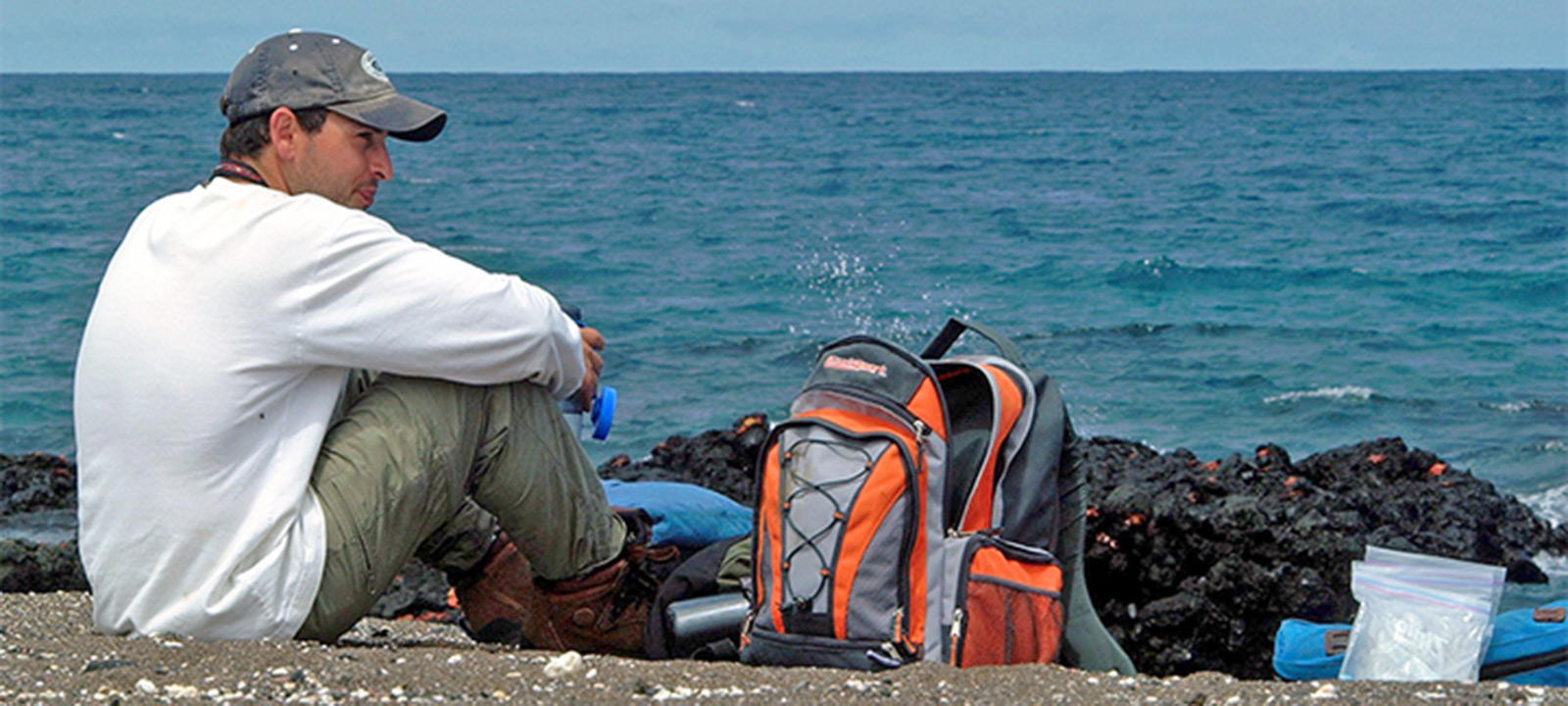
As a student in Ecology, Evolution, and Conservation Biology you will have the opportunity to work closely with faculty members who supervise independent research; participate in lab-based or field research at study sites in diverse forests, grasslands, lakes and rivers, and agroecosystems; and participate in projects ranging from quantifying biodiversity in soils, to modelling impacts of human activity on wildlife, to the foraging behaviour of wild predators.
Courses
There are hundreds of courses you can take within Ecology, Evolution, and Conservation Biology. Here are a few you might like.
First of a pair of courses that introduce students to the biological concepts necessary to continue into second-year biology. Covers evolutionary theory and its underlying genetic basis, basic cell biology, plant and animal nutrition, and energy acquisition.
Introduction to statistics, with emphasis on the application of commonly applied parametric and non-parametric statistical methods in the biological sciences. Use of computer software to manage data, conduct statistical analyses, and report findings in publishable formats.
An exploration of the field of Evolutionary Biology as an ongoing scientific endeavour. Current research methodology and development of concepts relating to the study of evolutionary change, adaptation, and the history of life will be examined.
Ecological and evolutionary basis for behaviour, the role of behaviour in enabling an organism to adapt to its environment. Topics include optimization and game theoretic approaches, foraging, sociality, mating, and parental care.
Take action & plan
Program requirements
Choose application type:
English-language requirements
English is the language of instruction at UBC. All prospective students must demonstrate English-language competency prior to admission. There are numerous ways to meet the English Language Admission Standard.
General admission requirements
IB Diploma Programme
- Completed IB Diploma, including at least three Higher Level courses.
IB Certificate Courses
- IB Certificate courses (Standard and Higher Level) may be used in an admissions average if you are graduating from a recognized high school curriculum that can be used as your basis of admission.
- IB Math Applications and Interpretations SL, or IB Math Studies, do not satisfy the math requirement for admission to UBC’s science-based programs, the Faculty of Management, the UBC Sauder School of Business, or the Vancouver School of Economics.
Degree-specific requirements: Science
- IB Math Analysis and Approaches SL or HL, or IB Math Applications and Interpretations HL (IB Math Applications and Interpretations SL, or IB Math Studies, are not acceptable)
- One of IB Biology, IB Chemistry, or IB Physics
- Grade 11 or equivalent Chemistry
- Grade 11 or equivalent Physics is strongly recommended
Note: Grade 11 Chemistry and Physics requirements listed are only relevant to students who are not completing the equivalent IB Diploma Chemistry and/or Physics courses.
For students studying outside of Canada, some examples of courses that may be accepted as Grade 11 equivalents are junior-level courses for American students, and IGCSE and O Level for those following British-patterned curricula.
Related courses
The following subject categories are particularly relevant for this degree. Consider taking courses in these areas in your junior year and senior year.
- Language Arts
- Mathematics and Computation
- Sciences
Want to get a feel for campus?
If you’re unable to visit UBC in person, or you just want to get a sneak peek at your new home campus before you arrive, take one of our virtual tours. Current UBC students walk you through UBC’s residences, study spots, recreational facilities, lecture halls, academic buildings, and more.
Related programs
Want to learn more?
Visit the Irving K. Barber Faculty of Science website to learn more about Ecology, Evolution, and Conservation Biology.
View full program detailsGet a post-graduate work permit for up to three years if you are a full-time UBC international student graduating from a bachelor’s degree program and meet all eligibility criteria.
Want to learn more?
Visit the Irving K. Barber Faculty of Science website to learn more about Ecology, Evolution, and Conservation Biology.
View full program details